Billie Eilish and FINNEAS Deliver an Unforgettable Oscar Moment with “What Was I Made For?”
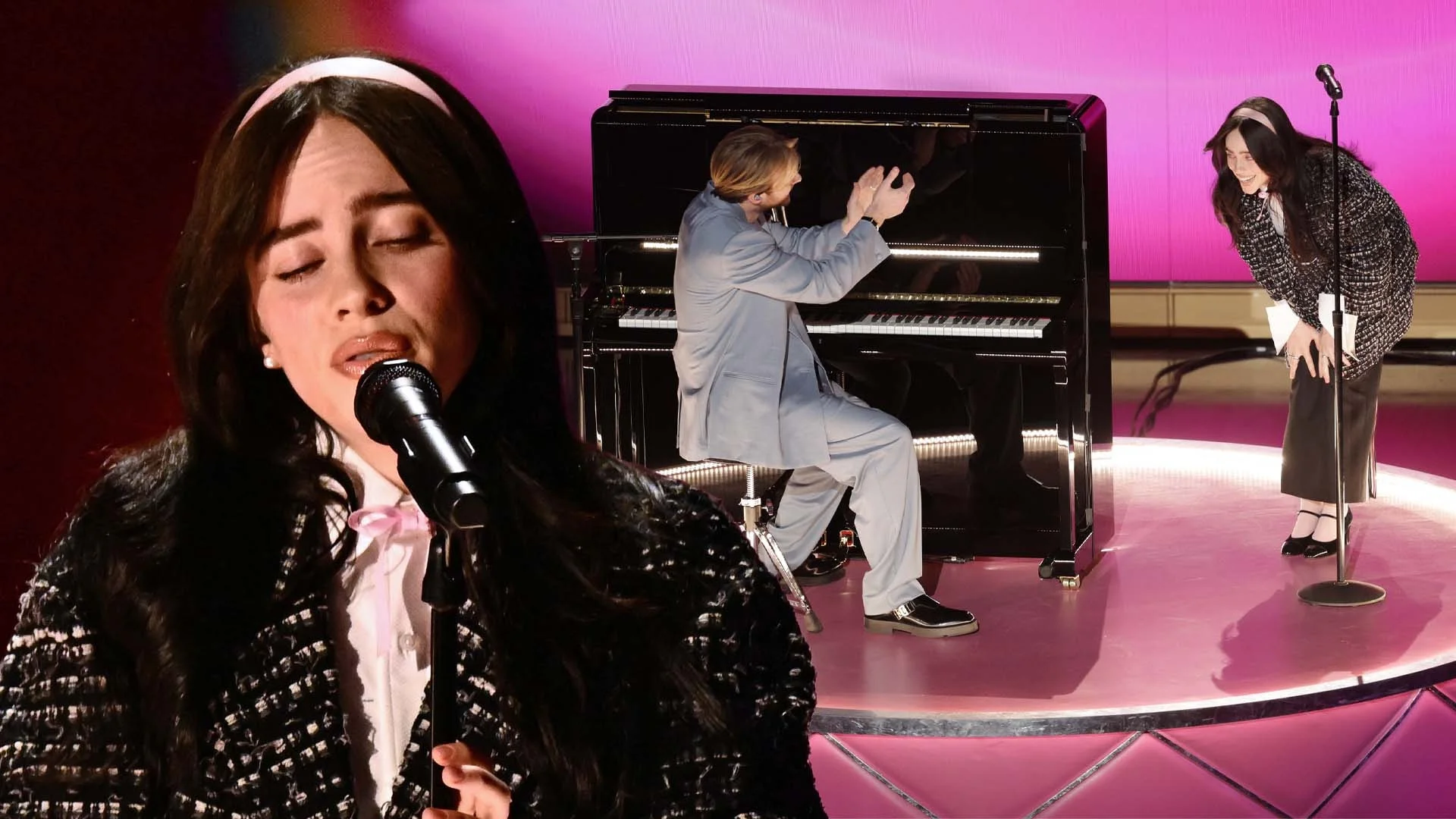
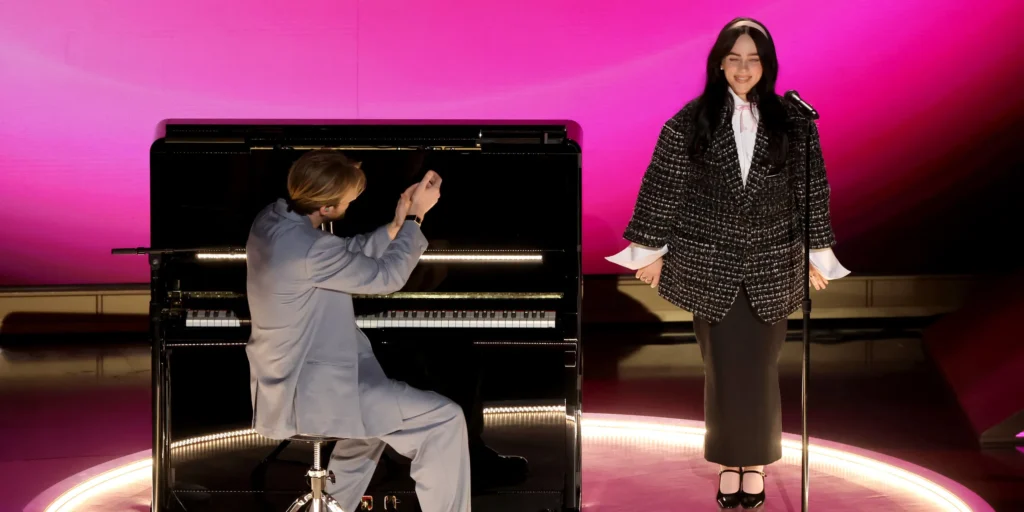
It was a moment of pure stillness in an otherwise glittering, chaotic Oscars night. The stage lights at the Dolby Theatre dimmed, the audience hushed, and all eyes turned to the siblings at the center of it all: Billie Eilish and FINNEAS. Moments after winning the Oscar for Best Original Song, the duo performed their haunting ballad “What Was I Made For?” with such fragility and grace that time itself seemed to pause.
Written for Greta Gerwig’s cultural phenomenon Barbie, the song had already earned acclaim for its vulnerability, nuance, and quiet introspection — traits that stood in stark contrast to the bright, plastic sheen typically associated with the film’s iconic subject. But on Oscar night, it became something more. It became a spiritual exhale, a whispered confession, and perhaps the most emotionally resonant performance of the entire ceremony.
A win years in the making
This is not the first time Billie Eilish and FINNEAS have stood at the pinnacle of awards season glory. In 2022, they took home an Academy Award for “No Time to Die,” the theme song to the James Bond film of the same name. But while that win cemented their place among music’s elite, “What Was I Made For?” feels even more personal — a song not built on grandeur or cinematic bravado, but on quiet devastation.
Speaking backstage, Eilish described the song as “something that came out of a very raw place.” FINNEAS added that the writing process, which took place during a period of deep reflection, mirrored the film’s themes of identity and disillusionment.
“This song is about more than Barbie,” Billie said in her acceptance speech. “It’s about feeling lost and trying to understand who you are when everything around you feels performative. That’s something I think a lot of people — especially young women — feel deeply.”
A performance that stilled the room
The visual staging of the Oscars performance was minimal yet deeply effective. Dressed in soft pastels, Billie stood center stage under a single warm spotlight, flanked by a small orchestra. FINNEAS accompanied her on piano, his presence understated, allowing Billie’s vocals to shine through with crystal clarity.
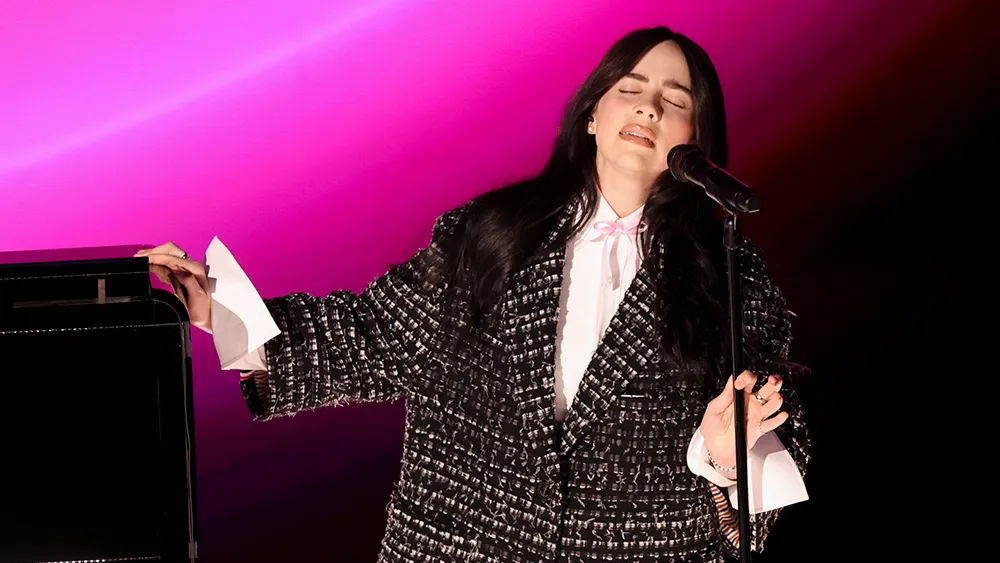
From the first note, the audience was visibly transfixed. “I used to float, now I just fall down,” Billie sang, barely above a whisper. Her voice trembled with emotion, never needing to rise above the melody to command attention. The quietude became its own kind of power — a reminder that not all great performances have to shout.
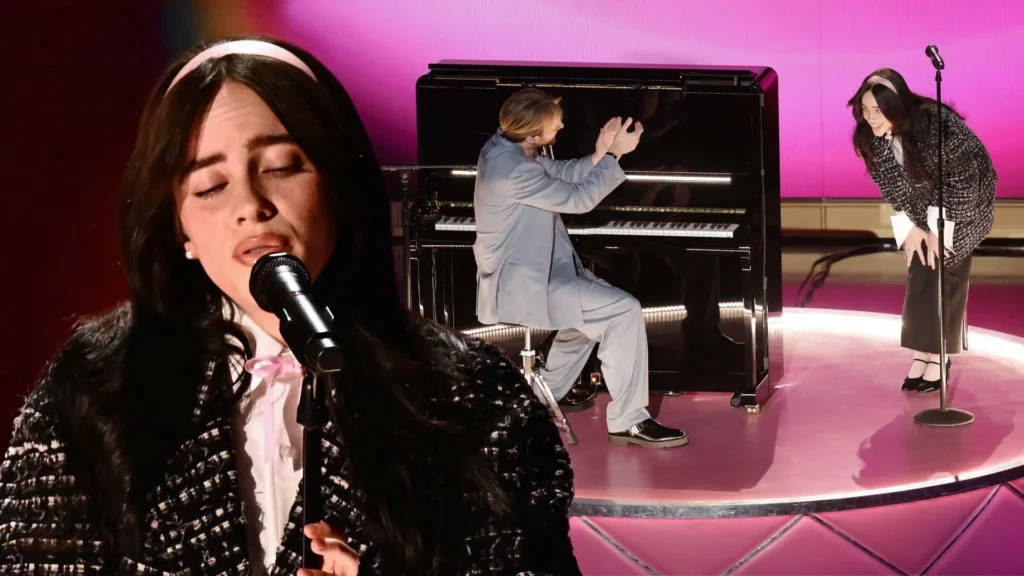
As the strings swelled behind her, the Dolby Theatre seemed to hold its collective breath. There were no cutaways to the crowd. No distractions. Just Billie, FINNEAS, and the aching vulnerability of a song that feels like a question we’ve all asked ourselves at some point: What was I made for?
Social media reaction: raw, real, and reverent
Within minutes of the performance airing, the internet exploded with praise. “Billie Eilish just silenced the entire Oscars,” one viewer tweeted. Another wrote, “That wasn’t a performance — it was a prayer.”
Clips of the moment quickly circulated across platforms, many paired with tearful reaction videos and heartfelt comments. On TikTok, the hashtag #WhatWasIMadeFor began trending again, months after the song’s initial release, as younger audiences revisited the lyrics with fresh emotional context.
Critics also responded with enthusiasm. The Los Angeles Times called the performance “a haunting masterclass in restraint,” while Variety dubbed it “the emotional apex of the night.”
A song for this moment
“What Was I Made For?” became a breakout success long before its Oscar win. It topped charts globally, became a viral TikTok sound, and earned Billie Eilish her second Golden Globe. But its real strength lies in the way it connects — not just with Barbie fans or award show audiences, but with anyone who has ever felt untethered in a world that demands constant reinvention.
In many ways, the song’s resonance mirrors Eilish’s own journey as an artist. From her meteoric rise at 17 to global superstardom and two Oscar wins by 22, Billie has always walked the line between fame and introspection. “What Was I Made For?” feels like a culmination of that inner dialogue — a distillation of both the pressure and the poetry of being young, female, and seen by the world before fully seeing yourself.
FINNEAS and the power of sibling synergy
While Billie Eilish is often the face of their collaborations, FINNEAS’ presence behind the scenes — and behind the piano — is vital. Their creative partnership is built on deep trust and instinctive harmony, and nowhere was that more apparent than during their Oscars performance.
FINNEAS’ arrangement was delicate, allowing every breath and pause in Billie’s vocals to breathe. His subtle musical choices gave the song an intimacy rarely achieved on such a grand stage. Together, they reminded the world that true artistry doesn’t require spectacle — just honesty.
A legacy moment
Oscar night is often remembered for its red carpet glamour, surprise wins, or unexpected celebrity antics. But in years to come, it’s likely that Billie Eilish’s performance will stand out as one of the ceremony’s defining moments — a rare intersection of critical acclaim, cultural impact, and raw human emotion.
As the final notes of “What Was I Made For?” faded into silence, the audience rose in a slow, reverent standing ovation. No one shouted. No one clapped prematurely. It was as if everyone collectively understood that they had just witnessed something quietly monumental.
Conclusion: More than a performance, it was a reflection
Billie Eilish and FINNEAS didn’t just perform a song. They delivered a mirror to the audience — one that asked them to confront their own questions of purpose, identity, and belonging. In an industry that often prizes noise over nuance, their decision to lead with silence and sincerity was nothing short of radical.
In doing so, they gave the Oscars something it doesn’t always get: a moment of realness that lingers far beyond the gold statuettes.