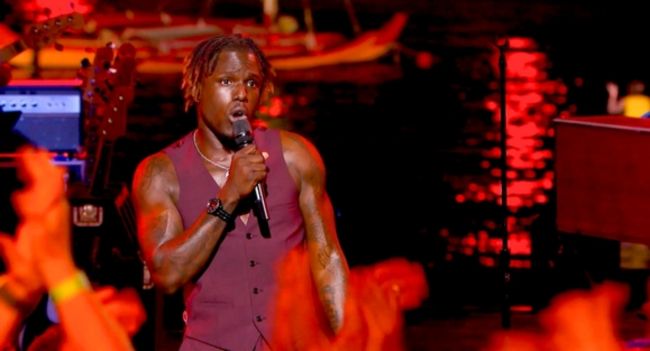

Jamal Roberts stood under the lights like a man ready to tear open his soul, and Liar wasn’t just a song anymore. It became a confession. In every trembling note, every strained breath, he wasn’t performing—he was reliving nights of regret, facing demons with nothing but a microphone and truth. This wasn’t Jelly Roll’s song anymore; it was Jamal’s story now. And for those watching, it wasn’t a performance—it was a mirror held up to our own hidden guilt. No theatrics. Just raw honesty that left a silence deeper than applause.

From the moment the first chord struck, something shifted in the room. It wasn’t just the music; it was the weight of it—the heaviness of a man standing naked in emotion, not hiding behind pitch or polish. Roberts sang not for attention, but for release. There was something in the way his voice cracked at the edges, how his eyes never quite looked at the audience, as if he wasn’t singing to us but to the version of himself he’s been running from.

In a world addicted to spectacle, this was the opposite. No flashy lights, no choreography, no attempt to entertain. Just a man and a microphone—and that was enough. More than enough. Because what Roberts offered was real. And in that reality, in that unraveling of his own pain, he gave everyone in the room permission to feel something they maybe hadn’t let themselves feel in a long time.

We’ve all lied—to others, to ourselves. We’ve all worn masks and built walls. But when Jamal sang “I’m a liar,” it wasn’t just self-condemnation. It was liberation. A kind of dark grace that reminded us we’re not alone in our brokenness. That maybe, by telling the truth—raw and ugly as it is—we can begin to heal.

As the final note faded, there was no roar of applause, no immediate standing ovation. Just stillness. A silence thick with emotion. The kind that says, we heard you. We saw you. And maybe, we saw ourselves too.
In that moment, Jamal Roberts didn’t just sing a song. He changed its meaning. He turned music into testimony. And those who witnessed it won’t forget it—not because it was perfect, but because it was true.