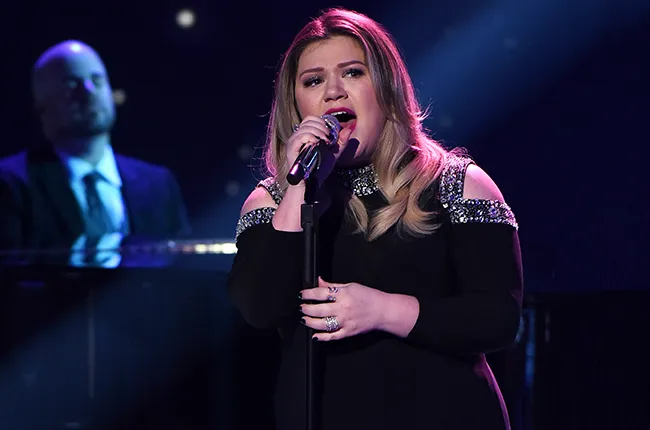
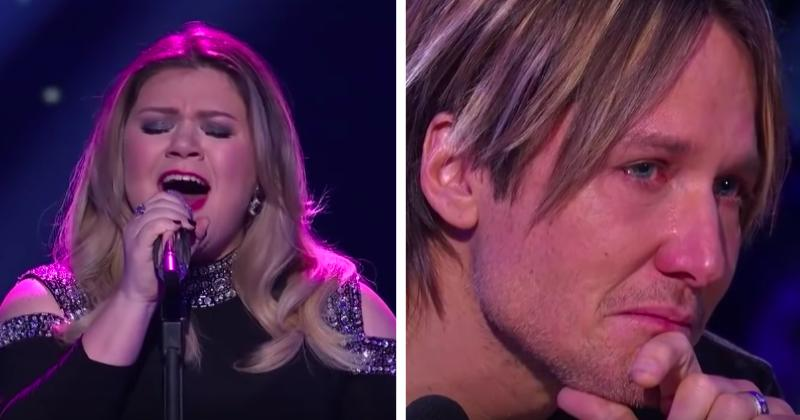
Keith Urban didn’t say a word — but the tears streaming down his face said everything, telling a story no words could capture. Under the harsh, unrelenting glare of the Idol stage lights, the entire arena fell into a stunned silence, as if the world had collectively paused to witness something profoundly real. Kelly Clarkson stood alone at the microphone, her body trembling slightly, every muscle taut with raw emotion as she prepared to deliver “Piece by Piece,” a song that had already touched millions but had never felt so alive and urgent.
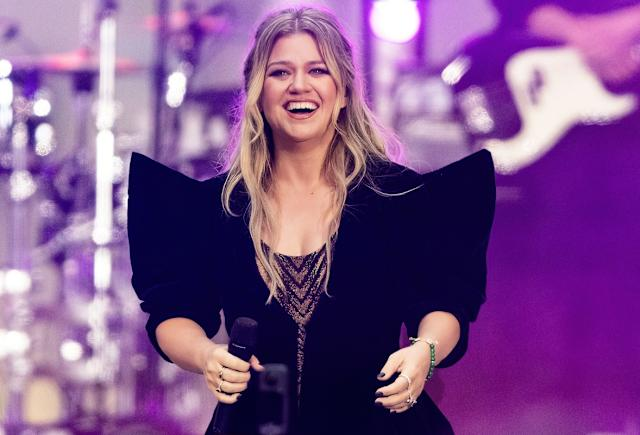
This wasn’t just a performance — it was a journey through pain and redemption, a deeply personal story about a father who abandoned his family and a daughter who found the courage to rebuild herself from the fragments left behind. As Kelly’s voice wove through the verses, fragile yet fiercely determined, the audience was drawn into a shared experience of heartbreak, resilience, and hope. Each note was soaked in vulnerability; every lyric was a scar laid bare. When her voice cracked on the final verse, it was more than just a singer hitting a difficult note — it was a moment of pure humanity, a shattering of the façade that performers often hide behind.
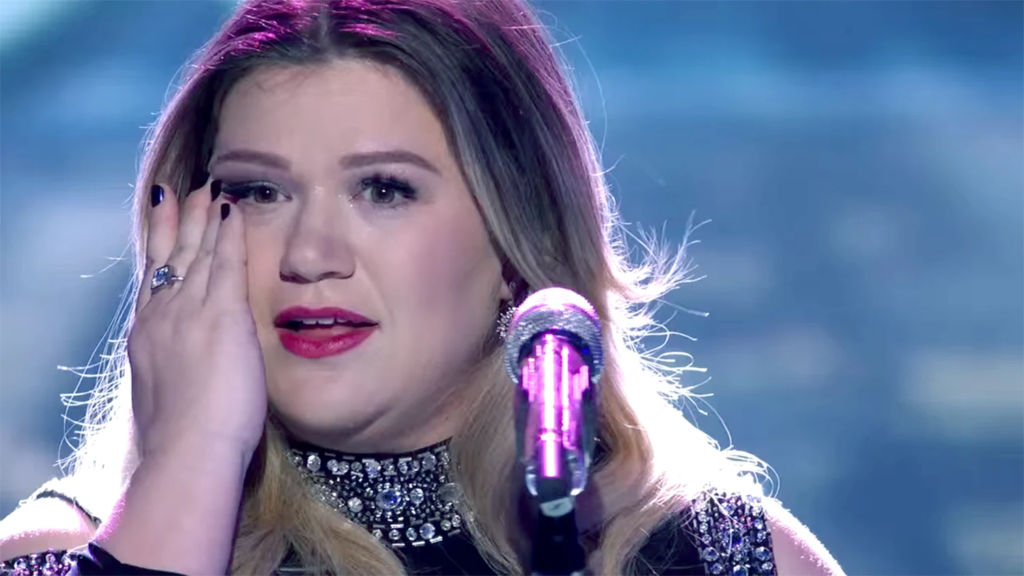
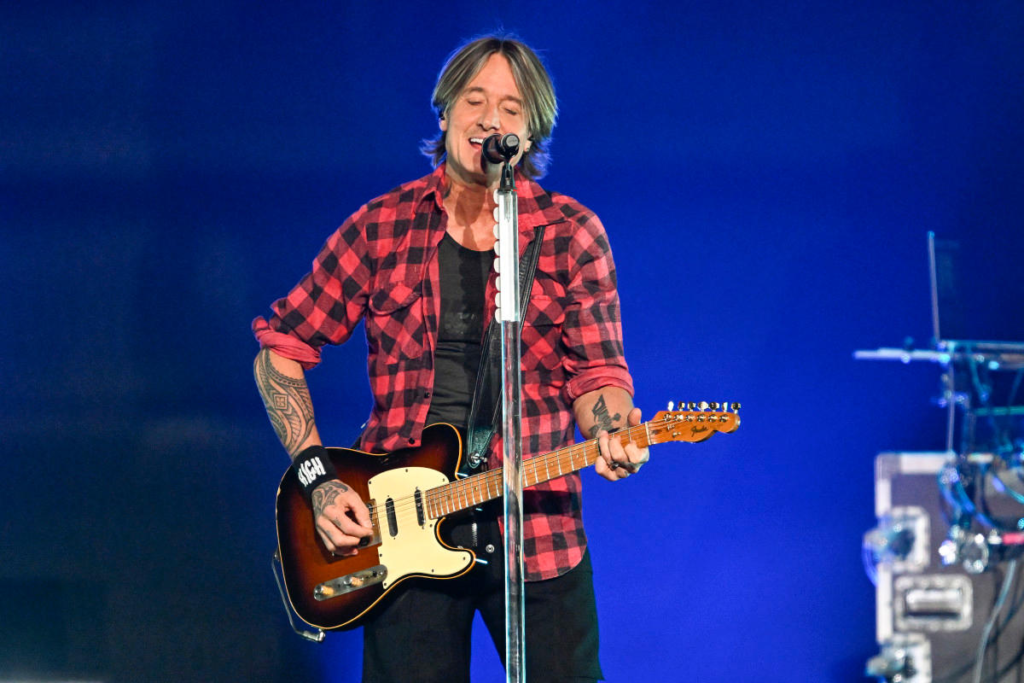
Judges and viewers alike were caught off guard by the intensity of the moment. Keith Urban, usually composed and quietly supportive, wiped tears from his cheeks, his face a mirror of the pain and healing Kelly poured out. Even the production crew behind the scenes reportedly paused, caught in the gravity of what was unfolding live before millions of eyes. The silence in the arena was not awkward — it was reverent, as if everyone understood that this wasn’t entertainment but a profound act of courage.
The impact rippled far beyond the stage. Across living rooms and social media feeds, millions connected with the song’s message — the raw ache of abandonment, the struggle to forgive, and the triumphant power of reclaiming one’s voice and identity. “Piece by Piece” became an anthem for anyone who had ever felt broken or left behind, reminding them they were not alone, that healing was possible. Kelly Clarkson’s performance transcended the usual boundaries of a televised competition; it transformed Idol from a singing contest into a collective moment of empathy and understanding.
In that unforgettable night, Kelly didn’t just perform — she bared her soul and, in doing so, became something even greater than an Idol. She became a symbol of hope for the wounded, a voice for the silenced, and a beacon lighting the way for those still piecing their lives back together. The power of her story, carried on the wings of her unforgettable voice, lingered long after the final note faded — a testament to the healing magic music can hold when it’s delivered with truth and heart.