
From Sidewalks to Stardom: How a Spanish Guitar Cover of “Despacito” Turned Imad Fares into a Viral Sensation
In a world saturated with digital performances and studio-polished perfection, it’s the unfiltered, unplanned moments that often resonate the most. That was exactly the case when 26-year-old street musician Imad Fares set up his spot on a sunny afternoon, guitar in hand, and strummed the first few notes of a stripped-down, Spanish acoustic version of Luis Fonsi’s global hit “Despacito.”
No stage lights. No backup dancers. No high-tech speakers. Just a young musician, a battered guitar, and the quiet confidence of someone who’s poured thousands of hours into his craft.
Within minutes, the city sidewalk transformed. Passersby paused. Smiles appeared. And then, something even more magical happened—people began to dance. Couples swayed in sync, strangers found rhythm together, and in the most heart-melting moment of all, a toddler in a bright red dress broke into a spontaneous boogie that sent the crowd—and later, the internet—into delighted disbelief.
A Moment That Felt Like Magic
Captured on a passerby’s smartphone and posted to social media, the performance has since gone viral, with millions of views across TikTok, Instagram, and YouTube. But this wasn’t a moment engineered for views—it was, by all accounts, entirely organic.
“I was just playing what I love,” Fares said in a short interview following the unexpected surge of attention. “I’ve always liked giving famous songs a little twist, and with ‘Despacito,’ I wanted to pull it back—make it softer, more romantic, like how you’d play it at a candlelit table, not a nightclub.”

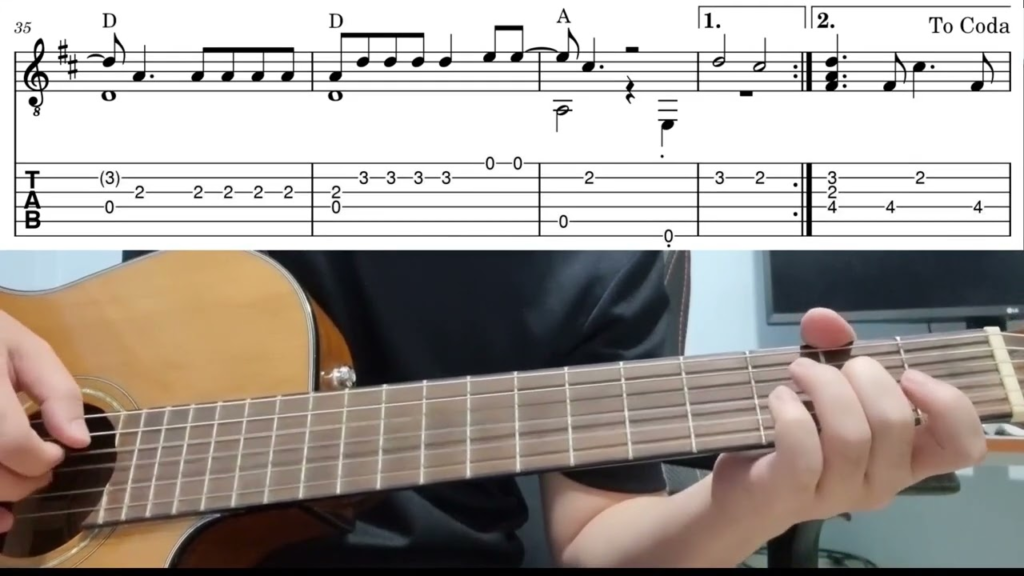
And that’s exactly what he did. With delicate fingerpicking, flamenco-inspired flourishes, and subtle rhythmic changes, Fares turned a dancefloor anthem into an acoustic serenade—without losing an ounce of its infectious charm.
Music That Moves—Literally

The charm of the moment wasn’t just in the melody. As the notes floated down the city street, something subtle but beautiful took place: people connected.
“You could feel it,” said Lena Morales, who happened to be walking past with her partner. “At first we were just listening, but the rhythm just got into us. We looked at each other and started dancing, right there on the sidewalk. It was so spontaneous.”
The toddler who stole hearts with her uninhibited joy was another highlight. Her tiny feet tapped out a beat all her own, her red dress twirling with every spin. “It was the purest thing I’ve ever seen,” one commenter wrote online. “We don’t deserve this little girl.”

Social media platforms exploded with love. “This guy needs a record deal ASAP,” one user tweeted. “That baby in red? Star of the century,” another declared. Even fans of the original “Despacito” marveled at the reimagining. “I didn’t think I ever wanted a lullaby version of this song—until now,” read one particularly liked comment.
Who Is Imad Fares?
Until recently, Fares was just another gifted musician hustling on the streets. Born and raised in Marseille, France, to Lebanese parents, Fares grew up surrounded by diverse musical influences—from Arabic melodies played at home to flamenco rhythms echoing through his city’s vibrant arts scene. He began playing guitar at 13 and spent much of his twenties busking across Europe, slowly developing a distinct style that blends classical Spanish guitar with modern pop melodies.
“I never wanted to be just a cover artist,” he says. “I wanted to make people hear familiar songs in a new way.”
Fares has long believed that music should be accessible, alive, and shared in the most human way possible. “That’s what I love about playing in the streets,” he says. “There’s no ticket price. No barriers. Just music and people. That’s real connection.”

The Power of Reinterpretation
Fares’ success taps into a growing appetite for reinterpretations of popular music—especially those that strip back the gloss and offer something more intimate. “Despacito,” one of the most streamed songs of all time, is typically associated with high energy and club scenes. But in Fares’ hands, it becomes something entirely different—an invitation to slow down, to listen, and, perhaps most importantly, to feel.
That shift in tone is part of what made the performance so memorable. “It reminded us how music can change a space,” said Jamila Rowe, a music educator who viewed the video. “He created an atmosphere where people weren’t just entertained—they were transformed, even if just for a few minutes.”